Curiosity as a Guiding Principle (EN)
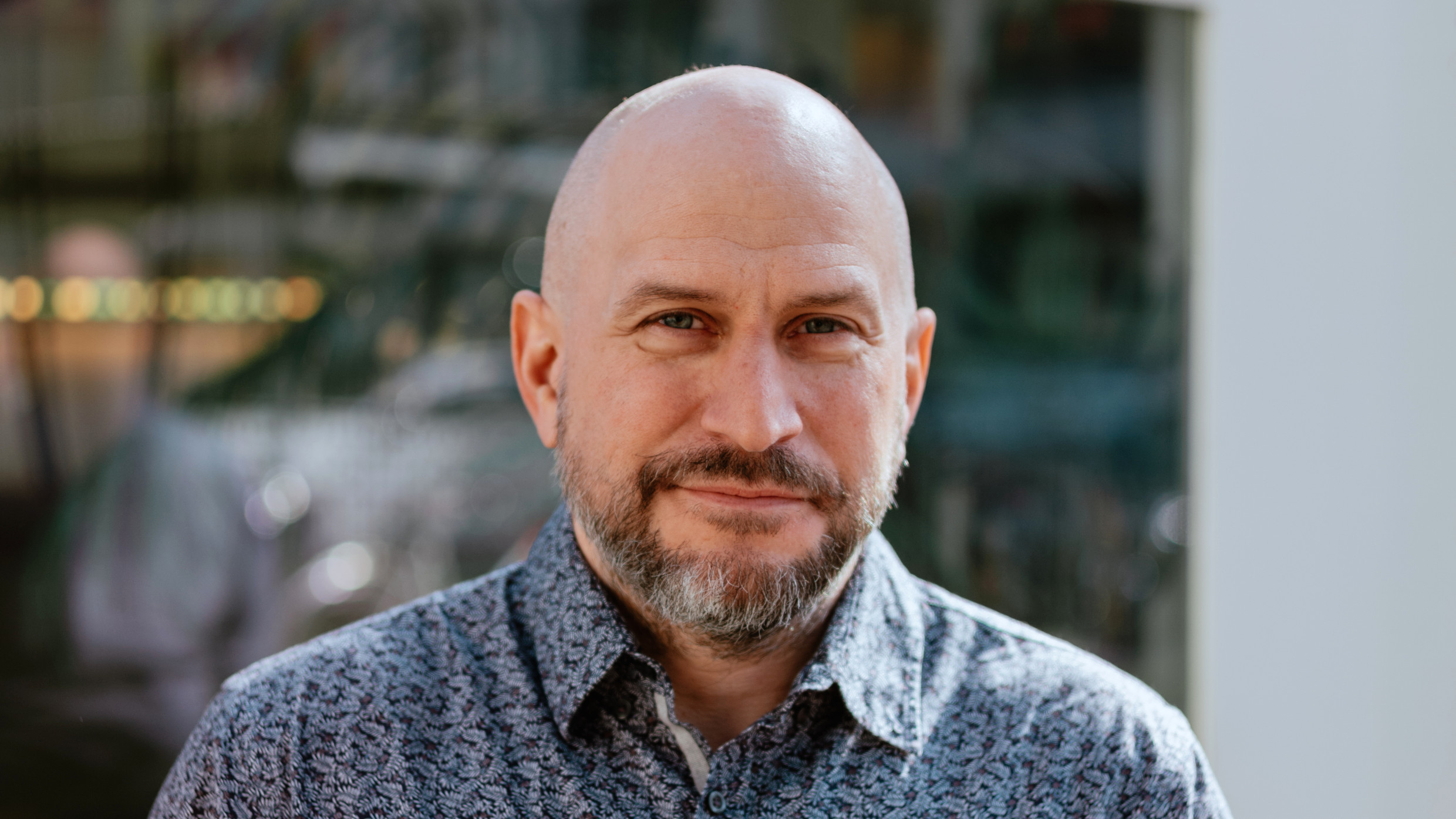
What happens when banks become more cautious? Prof. Per Östberg explores how financial regulation shapes the wider economy and why robust methods are key to understanding these effects.
Curiosity and a desire to learn new things have always played a significant role in Per Östberg’s life. This was evident even in his teenage years, when he accompanied his mother to Sri Lanka for several years while she was working for UNICEF. That same curiosity continues to shape his approach to research and teaching today. He initially studied economics, but a course in finance opened his eyes to its more concrete and quantifiable theories, which were in stark contrast to the often abstract concepts of economics. “I discovered the subject, loved it, and decided to pursue a PhD because I wanted to learn more,” he recalls. An academic career followed naturally. “It wasn’t a deliberate decision, but a gradual progression that eventually led me to become a professor.” For Per, one of the best aspects of academia is the expectation to keep learning. “It’s a fantastic luxury,” he says. He finds both teaching and research equally fulfilling. As a researcher, he enjoys learning new things and making discoveries that no one else has made before. As a teacher, he values the opportunity to inspire others with the same enthusiasm.
Beyond banks

Recently, much of Per’s research focuses on the impact of financial regulation on the wider economy. In a project funded by the Swiss National Science Foundation, he examines the unintended consequences of stricter banking regulations. Although these measures are designed to safeguard the stability of the financial sector, they affect not only banks, but also firms and households. For example, if banks lend more cautiously, companies may struggle to finance investments, and households may face more restrictive mortgage conditions. Such changes have ripple effects throughout the entire economy. While the impact on banks has been studied extensively, Per’s research aims to improve our understanding of the effects on the economy as a whole and to quantify them.
On a side note, he also points out how financial markets are commonly misunderstood. “One misconception is that well-functioning markets are predictable when in fact they are fairly unpredictable, since all available information has already been incorporated into prices,” he explains. “The conclusion is that we should be wary of people who claim to know with certainty what the state of the market will be tomorrow!”
Getting the methods right

Another strand of Per’s research focuses on replicability and methodology. Being able to replicate the results of existing work is essential for scientific progress. Over the years, this work has led him and his collaborators to reconsider established approaches. In one project, for example, they discovered that a widely used method was flawed. They developed and applied a correction, only to find that it introduced new problems. This prompted them to rethink their approach once again and design methods that are more robust.
For Per, this experience highlighted the importance of consistently investing in methodology and taking the time to do things properly. Although careful measurement and robust methods are not always visible, they form the foundation for reliable research. This becomes even more important with the rise of artificial intelligence. He states: “While new tools make it easier to generate results, they also increase the risk of relying on methods that are not fully understood.”